[From the NY Times article on the non-binding House Resolution against a troop increase in Iraq]:
Despite the emotions on both sides, there were moments of agreement. Ms. Pelosi drew sustained applause when she said that everyone in the chamber praised the valor and sacrifice of Americans serving in Iraq.
Only in a Christian nation like America could there be such a "love the sinner, hate the sin" attitude, unquestioningly and nauseatingly repeated, always for political purposes, and without any real meaning.
What does it mean to "support" American troops in Iraq?
- To fund the brutal war of racist occupation they are waging?
- To praise those who continue to enlist after all pretense of the original (even then dubious) motive for the war has been dropped?
- To hope that "their guys" get killed when they come up against "our guys"?
Now, I'm not completely naive. I understand the political meaning behind saying "We support our troops"--and as long as that is a completely meaningless sound-bite, I guess I don't mind. But the second it actually comes to wanting an American soldier to "do his duty" and kill an Iraqi, or valiantly give up his own life, or have expensive new equipment, or even report for duty in the morning--then I am against such support. The only troops I "support" are those who desert or refuse to serve. This war is bullshit and anyone engaged in it is bullshit and I don't support the individuals without whose participation it could not continue.
[And to those who will say, desertion and subordination are hardly options, Ben!; I say: if someone told you, either you go out and kill in the name of a bogus cause, or spend time in jail and possibly ruin your life and bring disgrace upon your family---to me, there is no excuse for saving one's own skin* by shooting other people; it's disgusting.]
*= And I hardly imagine it comes down to this moral dilemma for our valiant troops--and why should it, when they are so kindly praised and supported in their execution of duty?
Friday, February 16, 2007

Thursday, February 15, 2007
Pop Music
The last time I wrote something about pop music, it was to say how unsatisfying "pure pop" is in an album context. For instance, compare the Buzzcocks singles to their albums. The albums have stretched out songs, instrumentals, different styles--while their singles show only one side of the band (albeit to great success). The same could be said of a lot of great artists: anyone who buys Bob Dylan's "Greatest Hits" is in for some good tunes, but you miss the inspired album tracks like "It's Alright, Ma" and "It Takes a Lot To Laugh..."
This almost could lead to a discussion of "two types of artists": one type capable of writing songs in a variety of formats, and another type that is oriented towards only one thing. So, the Velvet Underground, Wire, Joy Division, The Cure, Fucked Up on one hand, and Black Sabbath, Gang of Four, Motorhead, Pink Floyd, CCR, The Ramones, The Kinks on the other hand.
But that is not an argument I'm really interested in making--since the dichotomy really proves itself: in the division between "variety" and "unity," everything is varied if you look close enough at one level, and everything blends together if you zoom back far enough.
Rather, I would like to point out that everything needn't come down to pop music in the end. This seems to be the logic of the day, when Justin Timberlake is the most universally-beloved artist.
Take the Ramones, for instance. The general take on the Ramones is that they were influenced by Phil Spector pop, the trashy glam-pop of the NY Dolls, and pre-Beatles American pop-rock like the songs they covered ("California Sun," "Do You Wanna Dance?"). And sure, these are their influences. But, to make this point for the millionth time, the most important influence on punk is The Stooges. The Stooges, who are a "pop band" in no one's conception. And I think it is through this lens that the Ramones need to be seen, to debunk the idea that they are merely latter-day, fucked-up versions of Jan and Dean (why this is an appealing vision I don't know, because it takes all the fun out of the Ramones). And in this conception, "Beat on the Brat" looks a bit different. Isn't this the worst pop song ever?
Ok, so let's define pop music. My definition is that pop music is self-interpreting. On another day, I might say, "pre-digested." I don't mean this negatively, nor do I mean to say that it can't be internally interesting, but if you look at the Beatles' hit songs in their later period, it is still apparent that these songs are, for all their interest, not difficult to hum. "Lady Madonna," "Ballad of John and Yoko," "Obla-di-Obla-da," "Hey Jude." (Here I should say that the all-time worst Beatles hit is the earlier "Paperback Writer.")
The correct point to make, in defending pop music, is all the complexity and variety that can go within a pop song and have it still be self-interpreting. The classic example of this is "Good Vibrations" by the Beach Boys, or, in a later moment, "Love Will Tear Us Apart," by Joy Division. The appeal is, "look how much went into this, and you can still dance to it"--a perfect union of artistry and accessibility.
I don't want to walk all over that, but I think that it has warped everyone's conception of music. For one, I would say that the other essential tenet of pop music is that you throw everything at the wall and see what sticks---this being incompatible with the refinement and genius bands expect from themselves. This, I think, is the motive behind the Buzzcocks' longer album tracks--they are working out one impulse, which will then be "channeled" in a more concise form, into endlessly rewarding pop songs--the same way that Gerhard Richter's split artistic personality was mutually reinforcing to its separate tendencies.
Let's say, then, that we need to get over our fascination with Justin Timberlake and "the perfect pop song" and return to an album context (exactly what has been destroyed by 70-minute rap albums and the prominence of mp3s)--which will have the added benefit of moving away from pure style into a revaluation of form. For instance, instead of trying to graft your Beach Boys harmonies onto your neo-folk ramblings, why not try writing a riff or melody someone might actually want to listen to?
*****
Ok, so after I wrote the first part, I saw this review of an 80s indie-pop retrospective:
"A lot of these bands went in for jingle-jangle 60s-styled pop songs, recorded roughly and sung in starry-eyed schoolkid voices. At times it was defiantly unsexy, and defiantly unambitious-- the sound of idealistic student slackers shambling their way through deliberately simple pop." And this reminds me of when I met kids a few years ago who, when asked what music they listened to, simply said "pop," meaning of course, NOT top 40 stuff. What is hip NOW, I think, is to blur the line (as Pitchfork repeatedly attempts) and say that Toby Keith, The Byrds, and whatever band from Brooklyn are all working in the same idiom, *really*. I find this disingenuous and pretentious, but also wrong-headed. I really stick by my example of "Beat on the Brat," and the Ramones' insistence that they ALL loved the Stooges. As if to prove my point, Pitchfork gives a mediocre review to this collection of the music they are always championing, as if even they can see, when you pile a lot of these singles together, it kind of falls apart on the level of interest.
To forget that the reason the Jesus and Mary Chain are so great is for the same reasons that they AREN'T the Byrds is to fuck everything up.
Well, to conclude very haphazardly, here is a wonderful song which would make a terrible pop song: the opening credits of "The Big Gundown," scored by Ennio Morricone and sung by Audrey Nohra.
Wednesday, February 07, 2007
Man, I don't fucking care
I'm all for fine living, but "mixology," "bartenders who are more like actors," following protégés of certain bartenders, and cross-Atlantic competition, reeks of the unspoken-probability that everyone who goes to these bars is a douchebag.
In New York, everything is a cut above, and it's probably true that part of that is a trickle-down from these high-end establishments. It's probably also true that you haven't really had a martini until you've had a $20 one in a place like these, but FUCK ME if there is anything innately classy about bridge-and-tunnelers and thick-necked investment bankers getting trashed. Anyways, this shit can die a slow death or fuck off like all other euro-pretensions: hipster dives and jack-and-coke forever!
see also this description of what sounds like my worst-nightmare (Milk and Honey NYC):
At last - a bar where the post-modern infatuation with stardom and celebrity has been thrown out like so many shattered shards of a Crystal bottle. This hard-to-find gem on Eldridge St is invitation-only and the lucky non-famous who get the nod have to call ahead and get buzzed in through a hi-tech surveillance door. It’s very 007 except the likes of Pierce Brosnan wouldn’t get in - owner Sasha has banned Quentin Tarantino and outlawed all “name-dropping and star-f*****g.” Gorgeous cocktails like blood-orange screwdrivers and strong-mint mojito muddles are expertly prepared by Sasha himself while lucky guests get to take reservation-only booths or stool space at the small five-seat bar. He wields a strong stick does our Sasha: not only is name dropping banned but men cannot introduce themselves to ladies and giving out phone numbers is strictly prohibited. Quirky, classy and just in time.
Friday, February 02, 2007
Theory and education
There is a blurb from the Village Voice which appears on many of Slavoj Zizek's books: "...the best intellectual high since ANTI-OEDIPUS." This is reprinted in earnest, I suppose, while I think it captures two profound truths. Firstly, Zizek probably IS the most intellectually exciting and stimulating figure on the scene, to the extent that I am qualified to assent to that statement. Secondly, there is something intoxicating, something like getting "high," about reading Zizek--something that baffles straight-forward sense, something unlike normal reading, something--may I say?--addictive.
Here are the points I'll be working with (I've noticed a lot of times, my premise, not my argument, is what people disagree with).
This post has nothing to say about these thinkers, as such. I have read widely in the authors listed above; I like some more than others, I don't think any of them are "nonsense" or disposable; I think their contributions were among the most important intellectual contributions of the last century; and I read them for pleasure (and the pleasure of thinking).
This post is about their reception and use, which I hereby characterize as:
1) largely dillettantish
2) paying insufficient attention to the pre-history of these topics
3) stylistically damaging
4) guilty of "dumb versions" of their theories, and/ or "keywords" readings
5) pretentious and exoticizing
Largely dilettantish: It is an irony to me that the main readers of "theory" are not the expected population, grad students. While my friends and I read *heavily* in theory, in comparison to our other reading, it can only comprise a small portion of our total reading, because, after all, you can't get a PhD in the Theory Department. I think the sort of problems discussed in this post also lead to a dampening of enthusiasm for theory in more mature minds--the "high" wears off. In any case, people who stick with high-level critical thought no longer seem to be fan boys or dilettantes, but you may say they are "seriously engaged." Rather, those who seem to the biggest "fans" of theory are undergraduates and 20-somethings. As for 20-somethings, it is hard to care what they do in New York, in between their "music projects" and gentrifications, but when someone says that THOUSAND PLATEAUS is their "favorite book," it is hard not to snicker. As for undergraduates, the rest of this post will deal with them, but their dilettantism is almost built-in, since no professor is going to assign *all* of THE ORDER OF THINGS to an undergraduate class, but is far more likely to teach exemplary snippets, photocopies into a course-pack. (This is also disastrously true for Karl Marx.)
2) paying insufficient attention to the pre-history of these topics: Derrida, Levinas, Merleau-Ponty, and Sartre all wrote books on Edmund Husserl. Presumably 95% of undergraduate enthusiasts of Derrida have not read Husserl. I know I haven't! After I had read about seven books by Derrida, I opened a book by Heidegger and was floored by how foolish I had been to think that everything Derrida was doing (even stylistically) was new and his innovation, when even the first page of Heidegger's THE WAY TO LANGUAGE is astonishingly proto-Derridean. Not that everyone should read everything in order--but, if one reads Derrida at all, the first thing you notice is that he seems to have read everything. This, of course, would be a different kind of dilettantism, but a more desirable one: a dilettante who has read Husserl.
3) stylistically damaging: I actually wish more people wrote like Zizek and Derrida, who have completely different styles, each of which is all too easy to parody. However, wouldn't that be a
great improvement over the weirdly vocabulary-heavy, distended, humorless prose that undergraduates feel compelled to write in emulation of theory? See here for a perfect (and endlessly-generated) parody/example. [I must admit, I find it very depressing when it is assumed that I write at all in that tedious, name-dropping vein. The only paper I have ever written that involved Heidegger, Derrida, et al, was perfectly lovely and a "lay reader" said it was the best thing I'd ever written. Hi, Dad!]
As for 4) and 5), dumb versions and exoticizing, it is hard to suggest anything about the former, except, "Don't do it!," and the pretentious tendency to uncritically laud anything European is as rampant as the tendency to uncritically dismiss anything European qua pretentious. As for readers of theory who read something and say, "I love it! I'm not sure if I understood it right, though," I can sympathize, but one's time really could be better spent than in being completely mystified by Agamben.
As for my recommendations of how NOT to be a lame reader of theory (ack! that sounds likea title for some dreaded Amazon list), I can only suggest patience and, to quote Derrida, "doing your homework." Zizek *is* a great introduction, but I think he has the potential to be a dead-end for a lot of readers, since he mostly points to Lacan (maybe the "hardest" of the lot). I would suggest starting with Baudrillard (because he has all the most exaggerated qualities imputed to theory) or Foucault, and reading whole books instead of just bits and pieces (or just Wikipedia). I have always said, you probably will get the first 10 or so books you read plain wrong or only partially, but you can always re-read, and once you are in the swing of things, it all is less mystifying. Right now I am reading in the line Kant-->Hegel-->Husserl-->Sartre, and after that I'll probably do Nietzsche, Schopenhauer, Heidegger, Deleuze---since I don't "do" theory, I figure I have all the time in the world to get this background---but really you can do no wrong as long as your readings are honest and rigorous.
As for being intimidated by all this, that never got anyone anywhere, and if one is (as is most likely) intimidated by all the BAD versions of the "theory reader," why--all the more reason to get it right. Certainly one doesn't have to engage with these thinkers or their concerns, but they are as valid as the next, and at least raise interesting questions. Never mind how shaky the starting-point is.
Derrida obit in NY times
Guardian obit: "deep thinker or truth thief?"
Here are the points I'll be working with (I've noticed a lot of times, my premise, not my argument, is what people disagree with).
- By "theory," I mean a usually-European, post-1960, left-leaning, esoteric set of critics who write a kind of interdisciplinary philosophy that derives usually from Marx, Nietzsche, Freud, and Heidegger, rather than in the analytic and/or pragmatic philosophy popular in American Universities (hence you can't major in "theory" or usually study these subjects in an American philosophy department).
- Some names: Michel Foucault, Jacques Derrida, Roland Barthes, Jacques Lacan, Gilles Deleuze, Felix Guattari, Giorgio Agamben, Jean Baudrillard, Guy De Bord, Maurice Blanchot, Slavoj Zizek, Paul Ricoeur, Julia Kristeva, Luce Irigaray, Jean-Luc Nancy, Emmanuel Levinas; and closer to home: Frederic Jameson, Paul De Man, Gayatri Spivak, Judith Butler, Susan Sontag.
- I don't think it is useful or necessary to include a previous generation, although one will see a lot of mentions of: Walter Benjamin, Mikhail Bakhtin, Georg Lukacs, Gaston Bachelard, Theodor Adorno, etc. I say, "Leave them out of this!"
- That these thinkers (Derrida, Lacan, et al.) tend to be classed indiscriminately as post-structuralist, post-modern, etc.
- That much of the reaction against and enthusiasm for these thinkers has much to do with their reputation as subversive writers, whose self-important and inaccessible prose requires much analysis to get to the point of their "abstruse theories," if they aren't just clap-trap.
This post has nothing to say about these thinkers, as such. I have read widely in the authors listed above; I like some more than others, I don't think any of them are "nonsense" or disposable; I think their contributions were among the most important intellectual contributions of the last century; and I read them for pleasure (and the pleasure of thinking).
This post is about their reception and use, which I hereby characterize as:
1) largely dillettantish
2) paying insufficient attention to the pre-history of these topics
3) stylistically damaging
4) guilty of "dumb versions" of their theories, and/ or "keywords" readings
5) pretentious and exoticizing
Largely dilettantish: It is an irony to me that the main readers of "theory" are not the expected population, grad students. While my friends and I read *heavily* in theory, in comparison to our other reading, it can only comprise a small portion of our total reading, because, after all, you can't get a PhD in the Theory Department. I think the sort of problems discussed in this post also lead to a dampening of enthusiasm for theory in more mature minds--the "high" wears off. In any case, people who stick with high-level critical thought no longer seem to be fan boys or dilettantes, but you may say they are "seriously engaged." Rather, those who seem to the biggest "fans" of theory are undergraduates and 20-somethings. As for 20-somethings, it is hard to care what they do in New York, in between their "music projects" and gentrifications, but when someone says that THOUSAND PLATEAUS is their "favorite book," it is hard not to snicker. As for undergraduates, the rest of this post will deal with them, but their dilettantism is almost built-in, since no professor is going to assign *all* of THE ORDER OF THINGS to an undergraduate class, but is far more likely to teach exemplary snippets, photocopies into a course-pack. (This is also disastrously true for Karl Marx.)
2) paying insufficient attention to the pre-history of these topics: Derrida, Levinas, Merleau-Ponty, and Sartre all wrote books on Edmund Husserl. Presumably 95% of undergraduate enthusiasts of Derrida have not read Husserl. I know I haven't! After I had read about seven books by Derrida, I opened a book by Heidegger and was floored by how foolish I had been to think that everything Derrida was doing (even stylistically) was new and his innovation, when even the first page of Heidegger's THE WAY TO LANGUAGE is astonishingly proto-Derridean. Not that everyone should read everything in order--but, if one reads Derrida at all, the first thing you notice is that he seems to have read everything. This, of course, would be a different kind of dilettantism, but a more desirable one: a dilettante who has read Husserl.
3) stylistically damaging: I actually wish more people wrote like Zizek and Derrida, who have completely different styles, each of which is all too easy to parody. However, wouldn't that be a
great improvement over the weirdly vocabulary-heavy, distended, humorless prose that undergraduates feel compelled to write in emulation of theory? See here for a perfect (and endlessly-generated) parody/example. [I must admit, I find it very depressing when it is assumed that I write at all in that tedious, name-dropping vein. The only paper I have ever written that involved Heidegger, Derrida, et al, was perfectly lovely and a "lay reader" said it was the best thing I'd ever written. Hi, Dad!]
As for 4) and 5), dumb versions and exoticizing, it is hard to suggest anything about the former, except, "Don't do it!," and the pretentious tendency to uncritically laud anything European is as rampant as the tendency to uncritically dismiss anything European qua pretentious. As for readers of theory who read something and say, "I love it! I'm not sure if I understood it right, though," I can sympathize, but one's time really could be better spent than in being completely mystified by Agamben.
As for my recommendations of how NOT to be a lame reader of theory (ack! that sounds likea title for some dreaded Amazon list), I can only suggest patience and, to quote Derrida, "doing your homework." Zizek *is* a great introduction, but I think he has the potential to be a dead-end for a lot of readers, since he mostly points to Lacan (maybe the "hardest" of the lot). I would suggest starting with Baudrillard (because he has all the most exaggerated qualities imputed to theory) or Foucault, and reading whole books instead of just bits and pieces (or just Wikipedia). I have always said, you probably will get the first 10 or so books you read plain wrong or only partially, but you can always re-read, and once you are in the swing of things, it all is less mystifying. Right now I am reading in the line Kant-->Hegel-->Husserl-->Sartre, and after that I'll probably do Nietzsche, Schopenhauer, Heidegger, Deleuze---since I don't "do" theory, I figure I have all the time in the world to get this background---but really you can do no wrong as long as your readings are honest and rigorous.
As for being intimidated by all this, that never got anyone anywhere, and if one is (as is most likely) intimidated by all the BAD versions of the "theory reader," why--all the more reason to get it right. Certainly one doesn't have to engage with these thinkers or their concerns, but they are as valid as the next, and at least raise interesting questions. Never mind how shaky the starting-point is.
Derrida obit in NY times
Guardian obit: "deep thinker or truth thief?"
Monday, January 29, 2007
My favorite books in high school (part one)
It might be hard to believe for anyone who has seen me lugging around PICKWICK PAPERS lately, but there was a time when I probably would *not* have read a Victorian Novel if you had paid me. When I first came to college, I most wanted to study William S Burroughs and William Faulkner--whereas now I have the vague sense that if I read those authors, I might magically turn into that most disagreeable of creatures, an "Americanist."
William Burroughs: Naked Lunch
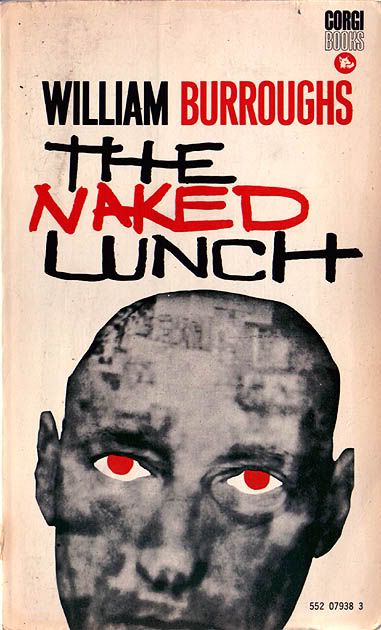
To the canny reader, or to the canny attender-of-high-school, this probably seems like it should have a parenthetical admission that I also loved FEAR AND LOATHING IN LAS VEGAS, THE ELECTRIC KOOL-AID ACID TEST, and REQUIEM FOR A DREAM. Well, I've never read those books, so (although I'm sure my parents were terrified that this was the case) I was not a "drug literature" fan, although I probably would have been friends with that kid. I think by the end of this list, you will see that I was nothing so nearly coherent as that. Coherence, which you could almost translate as "predictability," was my motto in college; I wanted everything to fit together into one monolith of perfect taste, each piece accommodating every other one. Well, that is no longer seems a sensible goal, and I am nostalgic for a time when I would have read a bunch of unrelated books in a row and thought nothing of it. In any case, NAKED LUNCH was perfect for me, because it was hilarious and subversive but not particularly upsetting ("dated" is probably the word I'm looking for) to my 17-year old sensibilities. That is, I could read it fairly carelessly, missing or misunderstanding most of the less-savory sexual parts and political context. Maybe I should look at it again, but I'm not sure I would even know what to do with it at the present moment.
Livy: The War with Hannibal

This I relate to a bit more, since Hannibal was Freud's idol, a melancholy figure of ambition thwarted, and Freud relates several dreams that feature Hannibal and his family (Hasdrubal and Hamilcar). Although, not being Tacitus (or Herodotus), Livy is a bit dry, and the most-exciting parts tend to be given the same narrative attention as boring tribunal elections, this is a great story and the magisterial/bureaucratic tone is perfect for Rome's side of the telling. It's broken up by year (the length of the consular term), and extracted from Livy's larger HISTORY OF ROME, but totally stands on its own, with a narrative arc and good guys/villains not dissimilar to PARADISE LOST. Now, in *this* case, one would be correct in assuming that I read a ton of other books in this genre: Tacitus' HISTORIES, Quintus Curtius Rufus' HISTORY OF ALEXANDER, Herodotus, Polybius, etc. Aside from Tacitus, this is probably the best, and it's unfortunate that I will probably never meet anyone who has read this book who isn't the biggest Classical Studies geek.
William S. Shirer: Collapse of the Third Republic

Having read THE RISE AND FALL OF THE THIRD REICH in eighth grade, I naturally had to read its "sequel," which really is a much-expanded version of events from the middle of the earlier book. Like that (equally massive) tome, THE COLLAPSE OF THE THIRD REPUBLIC answers a question: Why was Europe's most powerful country destroyed in a nearly-bloodless war in a matter of a few weeks, after having won The Great War in a brutally long but eventually decisive way? The best parts of this book are the "closet dramas" that Shirer replays from transcripts of cabinet meetings, the interference of mistresses in policy, and the constant threat of Bonapartism to the Republic. Ultimately, it drags a bit, lingering on the politics of the 1930s for a good part of the middle, sandwiched between the long and exhilarating summary of the 1870-1918 period, and the period of Hitler's aggression from 1936. Nonetheless, one can hardly think of a more interesting subject than the complete, abject and sudden collapse of the world's "most civilized" country---unless that subject were the further embarrassment of collaboration and Vichy, about which I would very much like to read.
William Burroughs: Naked Lunch
To the canny reader, or to the canny attender-of-high-school, this probably seems like it should have a parenthetical admission that I also loved FEAR AND LOATHING IN LAS VEGAS, THE ELECTRIC KOOL-AID ACID TEST, and REQUIEM FOR A DREAM. Well, I've never read those books, so (although I'm sure my parents were terrified that this was the case) I was not a "drug literature" fan, although I probably would have been friends with that kid. I think by the end of this list, you will see that I was nothing so nearly coherent as that. Coherence, which you could almost translate as "predictability," was my motto in college; I wanted everything to fit together into one monolith of perfect taste, each piece accommodating every other one. Well, that is no longer seems a sensible goal, and I am nostalgic for a time when I would have read a bunch of unrelated books in a row and thought nothing of it. In any case, NAKED LUNCH was perfect for me, because it was hilarious and subversive but not particularly upsetting ("dated" is probably the word I'm looking for) to my 17-year old sensibilities. That is, I could read it fairly carelessly, missing or misunderstanding most of the less-savory sexual parts and political context. Maybe I should look at it again, but I'm not sure I would even know what to do with it at the present moment.
Livy: The War with Hannibal
This I relate to a bit more, since Hannibal was Freud's idol, a melancholy figure of ambition thwarted, and Freud relates several dreams that feature Hannibal and his family (Hasdrubal and Hamilcar). Although, not being Tacitus (or Herodotus), Livy is a bit dry, and the most-exciting parts tend to be given the same narrative attention as boring tribunal elections, this is a great story and the magisterial/bureaucratic tone is perfect for Rome's side of the telling. It's broken up by year (the length of the consular term), and extracted from Livy's larger HISTORY OF ROME, but totally stands on its own, with a narrative arc and good guys/villains not dissimilar to PARADISE LOST. Now, in *this* case, one would be correct in assuming that I read a ton of other books in this genre: Tacitus' HISTORIES, Quintus Curtius Rufus' HISTORY OF ALEXANDER, Herodotus, Polybius, etc. Aside from Tacitus, this is probably the best, and it's unfortunate that I will probably never meet anyone who has read this book who isn't the biggest Classical Studies geek.
William S. Shirer: Collapse of the Third Republic
Having read THE RISE AND FALL OF THE THIRD REICH in eighth grade, I naturally had to read its "sequel," which really is a much-expanded version of events from the middle of the earlier book. Like that (equally massive) tome, THE COLLAPSE OF THE THIRD REPUBLIC answers a question: Why was Europe's most powerful country destroyed in a nearly-bloodless war in a matter of a few weeks, after having won The Great War in a brutally long but eventually decisive way? The best parts of this book are the "closet dramas" that Shirer replays from transcripts of cabinet meetings, the interference of mistresses in policy, and the constant threat of Bonapartism to the Republic. Ultimately, it drags a bit, lingering on the politics of the 1930s for a good part of the middle, sandwiched between the long and exhilarating summary of the 1870-1918 period, and the period of Hitler's aggression from 1936. Nonetheless, one can hardly think of a more interesting subject than the complete, abject and sudden collapse of the world's "most civilized" country---unless that subject were the further embarrassment of collaboration and Vichy, about which I would very much like to read.
Saturday, January 20, 2007
What are your eleven favorite metal albums, Ben?
Good question.
Sacramentary Abolishment- The Distracting Stone
Darkthrone- Panzerfaust
Mercyful Fate- Don't Break the Oath
Judas Priest- Painkiller
Slayer- Show No Mercy
Celtic Frost- Morbid Tales
Repulsion- Horrified
Graveland- Following the Voice of Blood
Morbid Angel- Altars of Madness
Immortal- Pure Holocaust
Napalm Death- From Enslavement to Obliteration
Wednesday, January 17, 2007
brief outline of demands concerning Iraq
(I know nothing politically/historically about this that was not available in the NY Times--I am an English student. On the other hand, this means I know how to read and dissect arguments fairly well. And that I am less ideologically fixed regarding these issues than a specialist would be.)
I think it would be very interesting to ask a proponent of the Iraq war & occupation a series of questions in which one would "play dumb" and prod each answer that is presented as self-evident with an "and then...?" or "so...?", because everyone must feel that the occupation and ongoing war is being waged on rather shaky principles. So, when someone defends the occupation by saying that "If we left, the region would fall into even further chaos," not only would there need to be an argument about the probability of that event, but (naively) what would be so bad about that?
To demonstrate that we need a single troop in Iraq, to my satisfaction, some combination of the following would have to be shown:
-- that it is morally justifiable to invade and devastate a sovereign country, and then continue to occupy it, as long as you feel bad about the initial invasion. (This, of course, is the premise of a number of film noirs, where someone keeps doing bad things to save their hide, even though they already regret the initial crime. They usually end up badly.)
-- that our military presence in Iraq is or could be anything but a standing insult and open wound to the people of that country
-- that our diplomatic pressure in Iraq can lead to anything but a kind of Vichy collaboration with the occupation (us)
-- that our continuing military presence is reducing the influence of Al Qaeda in Iraq
-- that our continuing military presence is a stabilizing influence in Iraq (this seems to be the main argument--if we leave, everything will fall apart--but, stated in this positive way, it is completely absurd. THE destabilizing force in the region is our military presence. To me this is very obvious), rather than a festering sore.
-- that even a horrible regime arising after our departure would be so much worse than the near-civil-war and bloodshed consuming Iraq now.
-- that there would be a kind of "domino effect" where, if Iraq "fell" (I don't see how this wouldn't already be the case, by the way), then other countries would follow.
-- that the United States is justified in militarily occupying other countries on the basis of a paranoid fantasy that our national security is at stake.
-- that this paranoid fantasy is the real motive, instead of the obviously economic and racist motives.
-- that Arab peoples are barbarians who can't rule themselves without white people around, and who will come to the "wrong" conclusions unless we are there to shepherd them in the right direction.
-- that Iraq ought to become a Jeffersonian democracy
-- that our interests in the region are not wildly inappropriate and imperialist
-- that Iraq ought to remain a single nation
-- that an Iran under the influence of Iran and Syria, et al, would be so awful.
-- that, what people would condemn as "isolationism" in a withdrawal, would not be a noble demonstration of our commitment to anti-aggression and self-determination.
-- that self-determination for Iraq can be achieved with our military there
-- that this ought to remain any of our business; that we haven't "done enough" yet
-- that things will at all improve in the next 3 years than in the past 3, if we "stay the course"
To me, these are the claims of anyone who thinks there should be a SINGLE American/British soldier in Iraq. I find them all highly doubtful and henceforth, I have no moral tolerance for anyone who would advocate our continued presence in Iraq on these grounds--if there are other arguments, I would like to hear them; if I have been mistaken about the validity of these, I would like to see evidence. Otherwise, any argument for "gradual" or delayed withdrawal, much less a "troop surge" or even "staying the course" will simply be posturing in the service of an oppressive and unjustifiable military occupation. Troops out now!--it's not just a sentiment.
As I see it, there would be two (moral and legal) justifications for an American military presence in Iraq, neither of which have been discussed (to my knowledge):
-- the invitation of the Iraqi people for our intervention
-- the approval of the UN (which has repeatedly stressed the opposite--that intervention in Iraq should be regional and multilateral)
And, as far as the probability of either of those events, I won't be holding my breath.
Monday, January 15, 2007
Highlights of Bush appearance on 60 Minutes
-- Suggesting that, instead of criticizing the performance of the military, people should criticize him instead. "If the people want a scapegoat, they got one right here in me, cuz it's my decisions" [sic]. Wow, ok, thanks for the pointer--now we'll start criticizing Bush.
-- "I think the Iraqi people owe the American people a huge debt of gratitude."
-- "People are discouraged, they don't apprecia--they don't approve of where we are."
-- The reporter describes how, in the presidential helicopter, Bush points out "the Washington monument and other landmarks along Pennsylvania avenue."
-- Something I didn't know--Bush personally signs every letter informing families that they now have a corpse in the family--this in contradistinction to Lyndon Johnson, of whom it might reasonably have been asked if he did know how many were killed that day. On the other hand, I wonder what is going through his head, then, every morning while doing this.
-- Reporter: "You're not very popular, to be frank, in the country. Does that bother you?" Bush: "Not really."
-- "The minute we found out there weren't weapons of mass destruction, I was the first to tell the people so." This reminds me of that Onion headline, "Barry Bonds Did Steroids, Reports Everyone Who Has Ever Watched Baseball," with an accompanying photo of Barry Bonds under the words: "NO SHIT-- An Onion Special Report on Barry Bonds and Steroids." As Bush puts it, "I was as surprised as anybody that they didn't have them."
-- When he trots out the Domino Theory for the middle east, as if this were an original or credible idea.
-- Admits that the current instability in Iraq stems from "decisions." As in the sentence, "No doubt, decisions have made things unstable." This is a new tactic I would like to apply to all things that go poorly, as if "decisions" were an uncontrollable deus ex machina.
********************************
My characterization of mainstream politics, since I was probably 16, has been that of an unamusing fantasy which obnoxiously interferes with everyday life, and yet that some people mind-boggingly take seriously. To me, there is no reason why George Bush should be treated any differently than Hulk Hogan (PLEASE NOTE THAT I AM BEING IRONICAL)-- someone whose appearance on TV is good for nothing better than a highlight reel of idiotic pronouncements and a failure to understand that he is a joke.
The problem with American politics (here it comes) is that anyone takes it seriously--that all of the horrors perpetrated by the American military and those whom we support, all of the blunders, the lies, the shameless waste of money and lives in war, our endorsement of the worst regimes around the globe, rampant indulgence of Protestant doctrine, etc.--not that it all happens, but that it is "spun" and glossed over and defended and debated SO BADLY. Although Chomsky has written extensively about "thought control in Democratic societies," it is still mind-blowing to watch the rhetoric in action and see how inarticulate and bafflingly stupid it can be--which is to say, how amazing that this ever worked on us. This is the supreme accomplishment of thought control (although I'm sure someone else must have pointed this out)--that as a nation we could be led by, and re-elect, and quarrel with (but never overthrow or discredit) a moron like Bush.
To be plain: We have gotten the president we deserve. If this man was able to "deceive" us, how fucking stupid are we?
How stupid is the "politics" (I mean mainstream Washington-centric debates about what goes on on either side of "the aisle") which debates and rationalizes and researches and interrogates and votes on these discussions, as if on an equal footing? How tragic that we have put our military at his beck and call, and seem unable to effect a halt in the pouring of soldiers into Iraq? When I compared Bush to Hulk Hogan earlier, I wanted to stress how pathetic it is that any intelligent mind should "grapple" with Bush ideologically--any reasonable, dignified person would object to even be in the same room with this man--if I were a member of congress, I would resign in humiliation at the impotence of my office and the stupidity of it all.
BUT, it is not enough that this man is a joke, because of course he is a dangerous joke. On one hand, he shows that mechanisms of power function so incredibly well that "even" he could be president and, despite some bumpiness, get re-elected and continue to have credibility in the media/washington/the midwest. It is like that horrible movie where Kevin Klein mistakenly becomes president ("Dave": tagline, "In a country where anybody can become President, anybody just did."), only with less happy results.
So, what I want to suggest is:
1) The position of "holder of sovereign power" is empty, a null set.*
2) That of course Bush doesn't know this; hence his wild celebration of his apparent power.
3) That Bush, as the nadir of intelligence, dignity and charisma, is a sick joke we have inflicted upon ourselves to demonstrate point 1).
4) That any opposition which indulges in the fantasy I have been describing, is not worth its name.
(*--I find it extremely difficult to believe what (tellingly) many people want me to think, that Bush is a "madman" and that (as he would have us believe) he should be the scapegoat for all this. Doesn't it disturb you that the opposition and Bush are telling us the same thing---"Blame it on me, ignore all the history and all the drives and motives which have gotten us here?" It disturbs me.)
Friday, January 12, 2007
Favorite Quote of the Year
I'm more or less paraphrasing, and I won't give my source, so that no one is embarrassed, but I have to say, this sums up a great number of interactions I have with people, and certainly captures the idiocy of many of the anonymous comments on this very blog. Everyone is free, of course, to leave snarky anonymous posts: but remember, idiocy is truly its own reward.
Before I get to my quote (which will, I assure you, be a letdown), an anecdote. When you are biking on the one-way avenues in Manhattan, you will notice a curious thing that people do in midtown, while they are crossing the street: they look the other direction, as if they were checking traffic, but in fact turning their heads away from traffic to check that "the coast is clear" from a direction where no traffic conceivably could be coming. If I may extend this into an analogy, this is the aim of the kind of moronic readings which are so prevalent today--and which this little corner of the earth, this blog, is also subject to. For, this style of reading, which looks the other direction, acts as if it were arguing with me, but rather than dismantling my argument logically--or even anecdotally--such readings appear to have no comprehension of even the general drift of my claims, instead preferring to ad hominem attacks, or fixating on aspects of my argument which they see as "faults," without then reading the next sentence which explains or admits this, or making wild assumptions about my argument without any familiarity with it at all--but a great familiarity in tone!
Anyways, I don't take it personally--and certainly I am not the only person who is thus besieged by incomprehension. But I don't see why anyone would waste their time flailing about arguments which I have, in fact, never made. Why even go through the pretense of grappling with my opinions, if you disregard their substance?! Why not just invent them! And then you could argue with an invented argument of mine, in the privacy of your own home, without presenting me with such distortions, and wasting both of our time.
Anyways, here's the quote, and if it is a bit late for a new year's resolution, the resolution which everyone should have this year is: READ MORE CLOSELY. without further ado, my favorite quote of last year:
If that is what you think I am saying, how stupid must you think I am? At least, more stupid than you.
I have a favorite personal application of this in my life right now, but it is ongoing, so I won't disclose the person it would refer to, but suffice it to say, sometimes I wonder, because I don't imagine anyone thinks that I am (unqualifiedly) a moron--although I'm sure there are people out there nodding to themselves, and saying, "Not a moron at school, but surely Ben has no clue about certain intangibles--things you can't learn in school!", to which I could only nod MY head and say, again, how completely you have missed the point of everything I am saying. Again, really this time, though--idiocy is its own reward.
And no, dear reader, none of this applies to you.
Tuesday, January 09, 2007
Five Favorite Movies of 2006
MRR "Public Safety" compilation LP
I have been excited about this record since long before it came out, since I was visiting my friends at Maximum during some of the early planning stages. Of course, a number of my fantasies about the lineup did not come to pass–unsurprisingly, no Gauze, no Fucked Up, no Tragedy, no Lebenden Toten. On the other hand, the absence of such bands was exactly what made Welcome to 1984 (to which this is a kind of sequel) such a success: no Dead Kennedys, no Anti Cimex, no Poison Idea, no MDC, etc. On yet another hand, however, I must admit: this is no Welcome to 1984. I can’t even imagine punk without songs like “No SS” or “Fuck Authority,” and plainly nothing on Public Safety will make that kind of impression. And what amazes about Welcome to 1984 is that each time you listen to it, you can almost discover a new favorite band: sure, we all know the Stalin and BGK, but the Skjit-Lars and Depression songs are just as good, and of course we all remember the UBR Mania of the early 2000s. Also available for comparison are recent compilations like Lengua Armada’s Histeria series, Iron Columns, and the Crust War Konton Damaging Ear Massacre album.
So, here’s my review: as an album, this doesn’t work. I am glad to have a lot of these songs, and some I can deal with, and some I could do without, but I see no reason why they were all thrown together, and I am thankful to my itunes for letting me reconfigure these tracks as I please and leave out what I will. Unlike Welcome to 1984, which is so nearly perfect that there isn’t even the less memorable tracks at the end are totally worthwhile, or the Crust War comp, which is less essential but extremely consistent, Public Safety has about seven songs that I would have cut, eleven songs I really like, and eight that are just ok. Clearly the logic in ordering the songs was to intersperse the winners with the duds, so that we will listen to the whole thing. This strikes me as weirdly puritanical–why shouldn’t I be able to eat dessert and skip my vegetables? Or, to reverse this analogy, why should I have to wade through insubstantial fluff to get to the delicious nutrient-filled vegetables?
The album begins promisingly, with a Formaldehyde Junkies track which sounds like it could have been on Welcome to 1984–or more precisely, Flex Your Head, since the vocalist sounds just like John Stabb from Government Issue. It’s quirky and catchy, and you have to love any song that only waits eight seconds before going into a guitar solo. This is followed by the long-awaited new Framtid song, which is a monster, although I have no idea what the uninitiated will think of it–write it off as standard Scandi-crust, or abusive noise, or maybe see it as the devastating behemoth it is? I have to say, in isolation, Framtid sound very strange, since their greatness in part comes from their refinement of a specific set of influences, and in part from genius songwriting partially obscured by their devastating sound.
Then, the album comes to a virtual standstill during the Strung Up song, which is like a bad clone (pun intended) of Caustic Christ, with vocals that are unfortunately intelligible (rhyming “bitch” with “rich”), obnoxiously dumb riffs, mandatory you’ve-heard-it-all-before intro and bridge, and no attempt at a hook. I can just see these guys at practice blowing themselves away at the idea of singing along with the guitar and having multiple parts to a song. Ugh. Next is the weirdest song, “Cotton Fields” by Spanish band Disease–whom I know as a Poison Idea-ish band, but I can’t shake the idea that this is supposed to be a Leadbelly cover, since the chorus is “In those cotton fields back home.” I checked the lyric sheet, which only confused me more, since it has about three verses which do not appear in the song. Anyways, this doesn’t at all sound like Poison Idea OR Leadbelly, and is exactly the out-of-left-field-mix-tape-hit that makes a good comp. After this is No Hope for the Kids, who I think are overrated, an opinion confirmed by this serviceable but muddy and low-energy track, which seems to be in search of a hook.
The Regulations are a band I still haven’t made up my mind about–it seems like I like about half of their records (their second EP and the self-titled 12"), and even though this song is only 1:30 long, the word “Stop” is uttered twenty-seven times. I suppose there are worse words, and I’m glad to see this band has moved on from the word “problems” on which they were previously fixated, but this song doesn’t do much for me. However, I like the style it’s in, and an album of similar songs (if less repetitive) would conceivably be quite good. The same can also be said of the Limp Wrist song. Surely this will not be the first or last punk song about something fucking with your head, and the song doesn’t make much of an impression, but my criticism would be more that this was not a suitable choice for a comp, where a band really ought to stand out. Next is the Direct Control song, after which the entire comp is titled, and this really lives up to the bar set by NOTA on Welcome to 1984's “Propaganda Control”–I would make a snarky comment like, “Strung Up should take notes,” but these two bands have toured together and even put out a split record, so obviously Strung Up have already declined to take notes. Anyways, although stylistically similar, Direct Control hand Strung Up their asses on this comp.
Persevere are an example of that strange (but not uncommon) phenomenon of an excellent Japanese band that, for some reason, no one else cares about. While perhaps not as great as Laukaus or the Addiction, Persevere have the same squirmy catchiness–once people move on from “Myspace Crust,” hopefully these bands will be their next stop. Anyways, their song is predictably great. Signal Lost are another band overlooked by tastemakers, although part of that must be that their records pale next to their live set. This recording doesn’t do them any favors in that area, because this has to be the worst-produced track on the album. It’s just hard to hear! Which is a shame, because (as always) the song-writing is top notch, and this is one of their best recent songs. Had this been recorded HUGE the way it deserves, it would have been one of the best songs on here; as it is, I can only look forward to hearing it live. Also, who in this band is reading Heidegger?
The Pedestrians song is better than I remember them being, with some neat parts, while I kind of can’t believe that the chorus to Sleeper Cell’s song is “Blind from the fear.” What a fucking tired cliché. Then, I had to laugh at Deadfall’s lyrics, which rhyme “into the fray” with “protegé.” That’s funny! Bravo, guys. Oh, but your song sucks.
The Nightmare song starts off side B, and it is wild! What is weird about this band is that they ditched the much-derided saxophone player, but their newer records all have this crazy, squealing guitar noise laid on top of everything, as if they still want a bunch of wild squeaks everywhere in the mix. I think that’s cool, because everyone is like, “Oh, I’m so glad there is no saxophone anymore,” but then there might as well be. This song also wins “best guitar solo” award for the comp. Look Back and Laugh have one of the best drummers in hardcore, and their song vies with Framtid in terms of sheer leveling-power, but unlike Framtid, LBAL haven’t really mastered hooks yet, and I can’t tell this song apart from any number of their other songs. This band’s best material remains their most recent 7", but sometimes I wonder if they will ever get beyond turning their amps to 11 and bulldozing the audience. The Ääratila song is over before it starts, but (along with Nightmare) is a perfect example of hardcore veterans schooling younger bands–in barely over a minute, they do everything they need, it’s catchy, it sounds cool, there’s a guitar solo, blah blah–they are geniuses.
The Observers song is ok, I have always thought the vocalist for this band, by trying to sing everything, just sounds like Christina Aguilera, and all their songs sound the same. Honestly, I am not entirely convinced that this song isn’t on one of their other records, but I checked and at least the title is new. The Sunday Morning Einsteins turn out a good song, which makes me think I should go back and listen to their new album. According to the liner notes, it has a “7 Seconds-style chrous” to offset the negative lyrics, but now I wonder if they have ever heard 7 Seconds. Holy Shit’s song is awesome, although this band creeps me the fuck out, and I hated them live. It’s called, “We’re Going Out and It Sucks,” and it sounds like they improvised the whole thing. I can’t really review the Gorilla Angreb song, because it seems like a joke at my expense, down to the dude on the right channel singing (what sounds like) “duh duh duh duh” in a ridiculous low-voice during the chorus. They do have the coolest band photo, though.
In theory, I like the Regress song, but since it is about drafting Ivy League kids to fight wars, maybe I shouldn’t. But for real, their guitar tone is just amazing, although if you listen very close, it’s uncertain whether the drummer can even play! What is he doing?! The First Step are a boring straight-edge band, but actually their song grows on me with every listen. They obviously have done their homework, and thankfully it is not that new-fangled faux-hipster straight-edge style like Righteous Jams–just a bunch of uglies wearing khakis and living in Connecticut (probably–if not, they should get working on that).
Career Suicide put out too many records and sort of lost my interest, but I still count them as one of my favorite current bands, and having just one song to go through here, instead of a whole slew, reminds me why they are so great. This song is maybe a bit busy, but it’s great, and it’s hardcore, instead of (what would have been the easy way out) a slower KBD “rager” with angsty lyrics–I guess Regulations have cornered that market.
The Smalltown song is easily the best song on here, and anyone who knows me knows that I’m not just saying that because it is the most poppy and most legible song. In fact, I really don’t even like this band, but this reminds me of the Replacements “Bastards of Young,” and the vocalist really sells lyrics like, “I don’t know any reason for me to go on; tell me, who can I count on?”--which, as poetry, suck, but here it works. There’s no point reviewing this song, because all I can say is it is catchy, catchy, catchy, and you won’t believe me until you hear it, or care what I think once you have.
Smartut Kahol Lavan’s 7" didn’t impress me, and neither does this track, really, but I have to give the vocalist credit for sounding *exactly* like Steve from 9 Shocks Terror. Sin Dios don’t really close the album on an interesting note: their song is overlong, weak, and kind of jammy. Further, I’m not sure I even agree with their politics–the song is called “Iraq,” and it celebrates “Armed uprisings against the English, / How they threw out the puppet king, / of how Iraq was forged from these battles.” I find that to be weirdly nationalistic, and it is perhaps no coincidence that the song has no idea what to do with the 24 years of Hussein’s secular, nationalist rule. “Onward, people of Iraq” seems to me an unhelpful and even misguided propaganda, to the degree that the “Iraq forged from these battles” was by no means universal and inclusive. Whatever, it’s a punk song, and the sentiment is in the right place, but the political situation is so much more complex than, “Steadfast, until we throw them into the sea,” because–what then?
So, both sides separately run out of steam, the B-side is overall weaker, and most of the American bands are disappointing. The five best songs are by Smalltown, Direct Control, Framtid, Nightmare, and the Pedestrians, followed by a pack of less distinct but still strong hardcore songs. The worst songs are by Strung Up, Deadfall, Sleeper Cell, and the Observers. I would add to that, Gorilla Angreb, but it would ruin my claim that all the worst songs are by American bands, and also I plainly made no effort to get into the Gorilla Angreb song, so it isn’t “bad” in the same way. There’s no point speculating on why bands like Criminal Damage or Human Bastard aren’t on here–but my overall complaint is, there are so many great bands out there, that even allowing for differences in taste, the difficulty of getting all the tracks on time, the requirement that all songs be new and unreleased, and the peculiar vortices of taste operating on the MRR staff, there is simply no excuse for filler. For instance, there was no need for there to be FOUR bands from the Bay Area on here, especially when none of those of those songs are great, and Welcome to 1984 had zero. I had high hopes for this, and it has its moments, but I don’t think it lives up to its potential. To end this review on a high note, though, I love the essay on the back cover, which is perfectly constructed and unembarrassedly enthusiastic.
Sunday, January 07, 2007
Fucked Up "Hidden World" Review
Do you remember (hüsker dü?) the first time you heard Motorhead’s 1916 album, or Hüsker Dü’s “Books About UFOs,” or The Ramones’ “Locket Love”–and realized that this garbage noise we listen to could maybe be real music, if you squinted hard enough? I hope so. You probably also know that hundreds of bands have tried to recapture the surprising pop genius of early punk, as if, as on the cover of The Minutemen’s Project: Mersh, a band could just will themselves to write pop gems. This is why the premise of DIY pop-punk and indie-pop has always struck me as ill-conceived: “We’ll just write great songs!” Not only that, but even when done well, I find an album-length barrage of “perfect three-minute pop songs” to be an exhausting chore. To me, a great album looks more like Abbey Road, Fun House, My War or Closer than just a slew of would-be singles. Call me pretentious, but keep in mind that Vibrators-Pure Mania and Misfits-Walk Among Us are among my favorite albums. I just think that bands would be better off trying out the album format than having delusions of grandeur about being the next Ray Davies. Blessedly, I have never delved into the indie-pop/pop-punk scene, but from living in New York I have a fair impression of it, and for the most part it is like reading a bad imitation of Hemingway or Chekhov–the format (the lo-fi pop song, like the short story) really demands perfection, and anything less is all the more glaring in its insufficiency.
Hidden World is simultaneously less “pop” and more “musical” than any of Fucked Up’s prior output. Their hardcore singles were catchy as shit, every one of them a potential mix tape entry, but that is not to imply that Hidden World is some tripped-out, inaccessible post-rock mess, devoid of catchiness. But it is that rare beast, the high-concept punk record, and I’m not sure I get the concept. Seven minute long Oi songs? Lengthy odes to outsider artist Henry Darger? Elaborate fantasy album art? Well, it’s all here, and all definitely floating signifiers–which is probably exactly the concept, as “cognitive dissonance” is a major theme of lyrics and interviews. Which is to say, they’re fucking with you.
The music is fucking with you, too. How many times can you hear a riff played before it isn’t cool anymore? I have to say, this is a single album’s worth of ideas crammed into a double album. Everything.....is..... really....spaced.....out. But, like the name of the B-side of the advance single, the record is full of “Neat Parts.” I would rather have these neat parts sequenced immediately following each other, as in The Who’s “A Quick One While He’s Away,” instead of spread out over 70 minutes, but for the most part, it works. And it works precisely because Fucked Up didn’t wake up one day and say, “Let’s just take the easy way out! Fuck hardcore!” Like The Ramones’ later work, is an established band-sensibility turned inside out to do things it wasn’t meant to do (compare “Beat on the Brat” to “Bonzo Goes to Bitburg”)–this still sounds like Fucked Up...I guess. While it could no longer reasonably be called hardcore, Hidden World has all the overflowing creativity of great early punk: The Ramones, The Misfits, The Germs, Stiff Little Fingers–bands that couldn’t always pinpoint the best outlet for their musical ideas, with strange but beautiful results.
Not everything works. Nearly every song loses momentum at some point, as the churning riffs tend not to go anywhere after a while. The songs “Manqueller Man” and “Fate of Fates” didn’t quite receive the same endowment in hooks as other songs. What also has to be remembered is the extremely limited format of the group–they aren’t Metallica, after all, and their idea of a long song tends to be to meanderingly jam out on minimal difference, instead of constructing a suite of riffs.
Hüsker Dü’s Zen Arcade remains, after untold listens, a record I remain ambivalent about–too much filler, pretentious, seemingly disjunct from their previous or subsequent records while obviously some kind of transition–and Hidden World suffers from all of these problems as well, although there is no knowing where Fucked Up will go next or if it will have much to do with this album. Nonetheless, a mixed-review of this album is not to be taken as equivalent to a review of a uniformly mediocre album. Since I have no clue what the band was going for, I can’t judge it to be a success or failure on its own terms, but any record with this many “neat parts” is so far ahead of the rest of the scene–reminiscent of Poison Idea’s Feel the Darkness, or Septic Death, or Nailbiter in that regard–that it will undoubtedly be some years before it really hits us that we all own an album with this cover art:
Saturday, January 06, 2007
Best Westerns (top 40)
- Shane
- Rio Bravo
- The Wild Bunch
- The Good, the Bad, and the Ugly
- The Naked Spur
- The Searchers
- High Noon
- Once Upon a Time in the West
- Red River
- My Darling Clementine
- Warlock
- One-Eyed Jacks
- The Man Who Shot Liberty Valance
- The Big Country
- Ride the High Country
- The Man from Laramie
- Winchester 73
- 3:10 to Yuma
- Ride Lonesome
- She Wore a Yellow Ribbon
- Unforgiven
- Butch Cassidy and the Sundance Kid
- For a Few Dollars More
- Man of the West
- Stagecoach
- Fistful of Dollars
- Comanche Station
- El Topo
- Rio Grande
- Pat Garrett and Billy the Kid
- The Proposition
- Keoma
- The Last Movie
- Ride in the Whirlwind
- A Bullet for the General
- The Ox-Bow Incident
- Django
- The Tall T
- The Shooting
- The Professionals
Thursday, January 04, 2007
Two rhetorical devices
I:
Over @ Talya's blog, you can see a discussion in her comments field about the film Pan's Labyrinth where she liked the film and I thought it was just OK. Without rehearsing those arguments, let's pretend that my complaints were something like:
- derivative
- terse
- poorly plotted
(none of which are true, really, or even complementary) And so Talya's pretend rebuttals would be that the film was instead:
- celebrating its influences
- suggestively minimal
- episodic
Right? You see. This is the simple version of "spin," but really what it means is that none of this was *essential* to her liking or my disliking the film. Because there certainly ARE movies that I like which I would call "suggestively minimal" or "episodic," so it isn't as if my criteria are hard and fast, either.
II:
This next one is a bit trickier, and I've tried to have this conversation with a number of people, to no avail. It is basically an "apples and oranges" thing--where something inessential is substituting or screening for other criteria. For instance, let's imagine the most recent Metallica album--I hope everyone has seen the documentary Some Kind of Monster and can remember this horrible, pointless record. What I mean would be something like this:
Person A- "Do you think I would like the new Metallica? Someone told me it was more like their old stuff, which I much prefer."
Person B- "Yeah, it's just raw and mean and they just don't take any prisoners!"
We would just call this "talking at cross purposes," I think. One person asks a question, and gets back an affirmative answer which is really no answer at all. I'm sure anyone can envision something "raw and mean" (say, the recorded sounds of a pitbull) which would not in the least resemble Metallica's early albums.
Another example:
A- Do you think I would like the new M. Night Shyamalan movie? I hated the last one.
B- I don't know, some people really don't like him--for me, it's all about the big twist at the end of his movies, and the big questions he asks about faith and modern myth. If you just a want a popcorn movie, he's probably not your ticket.
This one was hard to imagine, because who in their right mind would have seen "Lady in the Water?" But, let's pretend such a conversation could take place. Here, what is substituted is, as in the Metallica example, the work's own press. In the earlier example, a good metal album is supposed to be raw and mean--the only question is whether the converse is true. In this example, there is a preemptive defense against criticism: "if you are looking for mindless entertainment, look elsewhere!" Precisely like the narcissist listing his absurdly minor faults, this device puts one criticism in our mouths when we would like to utter another. The problem with Shyamalan's films is not that they are over-intellectual and that I am a philistine who can't appreciate them (the criticism allowed for above), but that they are awkwardly scripted and predictable.
I will post more about this later, but this common problem can be described as a false "either/or" set-up. What I find particularly offensive is the extent to which people are willing to put words in other people's mouths. For example, if I tell someone that they wouldn't like something because it is "too academic," I am basically calling them an idiot and then attributing this knowledge to themselves--they know their own taste, they prefer the lighter stuff.
Anyways, lately I am really into making sure that our arguments, our terms, and our conclusions have something to do with each other. That sounds obvious, but if you look at some of the blog comments I receive, or listen to people's conversations, or observe your fellow human beings, you will see how much is hackneyed and unexplained in daily life, political life, etc.
My favorite: "You have to admit that the world is better off without Saddam Hussein, right?"
Here, you have the set-up, EITHER you like Saddam Hussein, OR it was justifiable to invade Iraq. (Not to mention, I am not at all sure that the world is better off without him. That is an answer taken far too much for granted). Well, these terms are simply not commensurate--we can allow one thing without the other being necessary, but this is precisely the hand which the argument wants to force. Maybe too obvious an example, but 3000 US soldiers are dead because of it. So, I don't think this is simply a crazy fixation of mine.
What I would like to show is how the either/or differs subtly from the if..then proposition. Although they could be made "logically" to say the same thing-- "Either A or B" is the same thing as "If not-A, then B." But I think this previous example shows how they aren't quite the same. IF the world is better off without Saddam Hussein, THEN we were justified. That actually sounds pretty good. It's only when you see it as an either/or that you get the sense that you are being bullied. "Either you wish Saddam Hussein was still in power, OR it was justifiable to invade." If I am not stacking the deck with the way I am phrasing this, I think you can see that an if-then statement has a certain inoffensiveness to it--you can take or leave it. Whereas the either/or statement makes it seem like you have ONLY two choices--and this is so rarely the case. For instance, to ridicule this person even further, the moron who pointed out that the Ramones were not a DIY band, offering the proposition: "Either punk is DIY, or it can take no influence from bands that weren't DIY." Now, clearly that was not what I was saying. If that were the case, punk bands would have to make their own instruments, not play rock music (Chuck Berry and Elvis weren't DIY), etc. It's an absurd demand, and once framed in this way, it obviously makes no sense--which is why I would say that the "either/or" is a violent set-up, which censors distinctions, and is a kind of hard-sell or con that should always be stepped aside. Not that we can't commit to anything, but we should never be forced to assent or be told that "then we must think this."
More on this later--especially more examples.
Tuesday, January 02, 2007
Why think about punk? (expanded edition)
I.
I have given one reason to think about a meaning of punk: my own love of it and the difficulty of growing up and having to think through positions one cherished when younger. If I may congratulate myself for a moment, I think this is a necessary and commendable process. No thought should go unexamined. Anyone who finds my definition of punk at age 23 to be "dissembling" and "back-pedaling," is critiquing two things: 1) my biography, and 2) argument. On the other hand, this anonymous comment gives neither of those things. So it does not deserve to be taken seriously. But it does open up a complaint I have about punk.
The other reason to think about punk is that punk sucks. I have never seen such a crybaby, back-biting, unexamined mess, which manages to accommodate all sorts of lowlifes, burnouts, morons, assholes, talentless hacks, and ass-kissers. Talk about stunted growth! Rampant scenesterism and self-congratulation, the idea that we'll be fine if we just stay in one place--I WANT NO PART. If that was all I thought punk could be--and you see that I have more interest in it that to concede defeat on that count--it would not be worth contemplating.
You'll notice that my definition of punk had nothing to do with other human beings. Think about it. To me, hanging out is hanging out. I love it, but it isn't what makes punk. I'd like to see how many punks, in total isolation for years on end, would come out with any relevant or interesting principles.
This post has to admit that it will make no impact, however, and that the position it is trying to persuade is already too entrenched. I know how little interest our culture has in self-examination: hence the failure of psychoanalysis in America, but given the tendency of anonymous readers of this blog to completely and prejudicially misread what I write, I have no confidence that punk (in someone else's definition) is open to rethinking itself--either as I have, or some other way. And that's a shame.
I am all for likes being surrounded by likes. BUT FOR GOD'S SAKE MAKE IT INTERESTING. If it will somehow be "punk" to give a big "fuck you" to any definition of punk that means boring people leading boring lives and having boring conversations, resisting anything resembling "overanalzying" their boring decisions and predictable responses, then consider my previous post a call to all punks to have a dialectical relationship with punk-- to arrive at it again and know it for the first time.
II.*
(*edit)
Because of a history of being misunderstood, scarcely read, and widely disliked, I should add several things to head off such wrongheadedness here.
The anonymous commenter in the previous post, aside from a number of other embarrassing oversights, rudely took as over-literal the rhetorical contrition of these posts. I am wringing my hands in public about punk--and I hope anyone will concede that growing up, if done right, has to make some tough choices about what goes and what stays. I have made up my mind: punk stays. It would have been easy enough for me to trot out the opposite conclusion, and with some sophistry and argumentation, have declared my maturity and say that I had outgrown an important but now-detachable chapter of my life. I have not done so.
Moreover, I am not sure that I actually have anything to wring my hands about, except rhetorically--that is, nothing to "backpedal" about, except somewhat rarefied concerns which our anonymous commenter can count his blessings to never have had to contend with.
In short, all I have said is:
1) Punk is something that we try to adhere to, as something with meaning, and ironically, it is only as individuals and as a collective that is has that meaning. So, it is a construct, and I have tried to explain in what that construct consists.
2) And decided that it would have to do with two histories: a) that of rock music, in which it is a revolution, and b) that of anti-Christian, anti-bourgeois thinking of the last few centuries. Add to that the newer conception of DIY, and this I declared to be punk.
Somewhat more personally, I would ask (rhetorically) to anyone who knows me, if it seems at all probable that I should ever be acceptable to the "enemy" which I was beating my chest about in the last post. I have never been at home anywhere socially, except in the company of one or two like minds--and it is ludicrous to imagine that I would somehow be able to doff my awkward, contrary ways, shedding punk "values" to become a complete (or successful) norm. If anything, that seems further from the case now than ever--if punk is to be measured by owning the new Fucked Up record, well, then I enthusiastically qualify. Maybe by some other definitions, I would not qualify, but I'll be damned if I'll allow anyone to imply that I have become a likable, harmless person.
Friday, December 29, 2006
POST-PUNK: A POST ABOUT PUNK
(This was originally three different posts, which I have consolidated into one entry so that it reads chronologically.)
I.
When I was home over Christmas break, I was showing my dad some bulky sweater that I wanted to buy, and after viewing a series of bulky sweaters online, he summarized them: "Oh, so kind of a hipster look." Now, whatever. Who knows what he thinks that means. But what it definitely meant was, "Ah, this set of stimuli, I hereby file away under category X, never to disturb me again." It didn't mean, "Oh, I could see myself wearing that, if only I were younger," or, "I can see how that would be fashionable in New York but not here in the suburbs." I would liken it to the part in the Terminator movies, where you see behind Arnold's "eyes" and see the computer run through the series of possible identifications and responses. The computer doesn't "see" things--it categorizes them; the kind of categorization I am describing files things away so precisely *not* to see them. And something as innocuous as a bulky sweater!
My dad's response to this criticism was (partially) that I do this more than anyone--with all my subgenres and critical -isms, and of course my favorite category, "bourgeois." However, the infinite variety of different "cores" and "isms" at least testifies to a willingness to open up new categories when so demanded, and I will have something more to say about the bourgeois in a moment. My point is, the world is infinitely more various than our comprehension of it. To have a fixed number of categories guarantees confusion. This is the cause of nearly every argument I have with my dad. When he asks me a question like, "Is that in the Village?" when I have been describing something in New York, I have to allow that his conception of Greenwich Village is and will always be a term that encompasses probably 1/2 of Manhattan (this is a made-up example). But really, everything has to be filed away like this under a heading he is aware of. For example, my dad (in this fictional example) doesn't know NOLITA. Therefore, it is in the Village. Of course, to any one instance of this, I am "overreacting." I don't think so. Not only because it isn't just one thing, and it isn't just my dad.
My definition of the bourgeois, to be given in a moment, is completely unsurprising and I think we will all agree with it. It is not a Marxist definition, although I certainly see that behind it. It could roughly be given as: "the status quo," but that is so boring and not quite what I mean. And this is a category I make use of A LOT. But, unlike my dad's use of "hipster," I don't mean "bourgeois" ever as a "case-closed" recognition of a phenomena, but it is always something slightly cryptic and only partially descriptive. It is, basically, a poor adjective for most things. It isn't a subject heading, and is so vague as to be almost useless. But here's my definition: The bourgeois is that which does not want to be disturbed.
Now, let me give you another quote, from Flaubert: "Hatred of the bourgeois is the beginning of virtue." The bourgeois, of course, returns the favor. All of my favorite thinkers, Freud, Derrida, Baudrillard, Nietzsche, Marx, etc. are universally despised by our conventional wisdom. Freud is "discredited," Derrida's death was greeted with the nastiest obituary in the NY Times, Baudrillard is a lunatic, Nietzsche retrospectively a Nazi, Marx "works only on paper," and so forth. It's so ludicrous. But this enmity, this stubborn, mudslinging, empty (yet white-hot) hatred from all corners of respectable society...this is what you get. Why not embrace it?
To me, that can be the only definition for punk--in this moment, in this socio-economic order, in countries like this one--taking upon oneself the onerous and ugly position you already will have been given by hating/disturbing the bourgeois. "You're already going to hate me, let me make it easy for you, and clear for everyone else."
A problem immediately arises: this could be only an empty gesture. What if you are harmless, and yet you take on this aspect? You are easily IGNORED. In fact, this is what we see. No one sees a punk on the street and thinks "Oh, this person wants to DESTROY ME." This should be the case, unfortunately that ship sailed long ago.
Nonetheless, I refuse to admit what many have conceded to the bourgeois in a kind of postmodern defeatism-- that resistance, hatred, disturbance of the existing order is *already* "empty" and "co-opted" and a "floating signifier." Not that these things aren't true, but what is the logic here? That because "Nothing's shocking" anymore, we all should be content to let critical thought die out? This seems to be the argument.
This is probably why punk has such a low retention rate. It promises disillusioned kids a chance to change the world, to piss off their parents, to have crazy adventures, read Chomsky and go to protests, have an obnoxious diet, stupid hair, etc. And it should be all those things. But it can't be all those things ONLY, because then you realize 1) you haven't changed the world, 2) you don't even care about your parents, 3) you aren't having interesting adventures, 4) protests are dumb, 5) your stupid hair is getting in the way of meeting girls or getting a job, etc.
So, what are you left with? Some vague politics and being vegetarian. And some mp3s. Well, that hardly seems worth the effort. And here is the, "Well, what now?" question.
II.
OK, so this goes on--but not without a caveat or two first. This blog is really for people who know me, who I saw the day before (in which case, I have probably stolen our conversation and put it in blog form), or friends who I don't see that often and we only communicate by reading each other's blogs, or my parents and other well-wishers.
Of course, it is definitely ALSO for haters, but I feel like reading my blog without knowing me (or without giving a wide berth and confidence that I will end up somewhere), is probably just to get back your own message in return: duh. This isn't an academic treatise--I'm sure you noticed--there are gaps everywhere that I haven't filled in, that will be much easier for someone with some patience or knowledge to fill in. This is why I try to make everything fairly personal and evidently self-involved--not because "it's all about me," but so that no one will ever forget that there is a definite *perspective* from which this is originating.
So, my last post began by talking about my dad. That's something I'd like to return to here, for two reasons: 1) so that no one will EVER forget that everything I say comes from a certain place, certain things about my family and my upbringing that I love, certain things I want to destroy, and--if one were to forget that--then to get upset about what I'm leaving out/getting wrong/etc. Let's just say, I'm writing about me. I hope you learn something about you, but that is really up to how you read.
So, my dad. The first Black Flag album originally carried a "warning" sticker with a quote from the president of MCA records saying: "As a parent, I found it to be an anti-parent record." If there was ONE THING punk meant to me as an unpopular, dorky kid, it was Black Flag's ultimate dictum--don't become your parents. Now, I love my parents. Whatever. Hi, Mom.
To me, what was great about punk was that it wasn't just to "piss off" your parents, since anything can do that. It's the message: "don't BE your parents." Now, I know kids from high school who are already married, have kids, etc, so that at least literally, they already ARE parents (if not yet their own). But punk, to the extent that it is "not just a phase" and that it will have an eventual meaning in this discussion, is--wait--precisely that: that punk is not just a phase and will mean something IS in its not-being-just-a-phase.
Savvy?
All other youth culture is just that...youth culture. Punk, which of course everyone grows out of to some extent, in a way--and defining that will be the important thing--is something more irrevocable. It's something life-changing. It sticks with you. And of course, I'm not talking about people in bands or the rare few who can make a living within punk, and therefore don't have to leave or even step outside of it. I mean, obviously I've chosen to step well outside of punk for my chosen career. And maybe someone's answer will be, "oh, you blew it--if you aren't living in a squat and doing politics and making hardcore and eating communal dumpstered pasta, and instead are reading Barthes in your ivory tower, you lost it, you can't be punk anymore." And I TAKE THAT VERY SERIOUSLY. In the most literal sense, it's obviously true. Fact. Ok, so let's all take a deep breath and see that I am not trying to put together my life with *that* particular vision, which has its charms but really is not for me.
And here we arrive at the furthest I will dilute any definition of punk. As Gerard Manley Hopkins writes, "Enough!"
To recap this detour: not being one's parents, and making a new life out of that--fine, but that can't be everything punk is: I go to an Ivy league school, I live in New York, I read XXXXXX author, I listen to XXXXXX shit bands, I'm vegan, I don't have a real job, I live in a room the size of my laptop-- none of those things really have anything to do with punk, they just are things the complete opposite of my parents' existence. Punk HAS to be something else than just being a grad student, wearing tight pants, talking to Talya, and buying records I don't have the time to listen to. Duh. But really, some days, I'd like to pretend that is all it is.
I need to go to bed right now, and I want to get this post up, but let me leave you with one unsatisfactory answer, and one open question that I'll get back to. My interests, my personality, my style of thinking, my writing, my general disdain for humanity, my politics (such as they are)--these things aren't going anywhere. I am no nearer to being a normal, functioning member of society than ever. And that's not, in itself, punk. But I feel just as far away from everything as when I was 16, and yes, in a more complicated way, but really just in a sadder way. If I don't relate to DOA's lyrics anymore, and if Crass' politics seem a bit rickety, well-- that doesn't mean that I've found anything better: it's just all the sadder. But that makes it sound like punk is just "one more thing I can't relate to." But so is Victorian literary criticism, so are my best friends. Which is just to say, I hope that I have done some growing up, but all the procedures of growing up are just as full of shit as anything when I was younger---I mean, I thought high school was stupid, but it has nothing on the "real world"---and I guess I am still not willing to make those compromises. Not only that, I still despise people who do. If I am at all "better-adjusted" (which is by no means certain) than when I was a kid, it only makes clear that I will never be *well*-adjusted. And, again, that itself isn't "punk."
This is where we need to think some more about it. When I was a kid, simply being upset about all this was enough. That's what loud music is for. Now, it's like...well, here I spend 16 hours a day reading and thinking about "big ideas," and on the other hand, I have a completely alienated experience from everyone around me--maybe that is not a coincidence which I should just overlook. Maybe it's precisely that I am not thinking the same things which is *the thing* here.
So, I am still a person upset at the world, maybe more than ever, definitely in a more difficult and complicated way than before--and now that I've diluted the definition of punk where it maybe looks like I am willing to say that somehow MERELY being unhappy and listening to the Yardbirds somehow counts towards being punk, I'd like to say, OF COURSE NOT--and this is what I will reconstitute in the next post.
III.
So far, I've ruled out the following things as being the definition of punk, although some of them are obviously important, and we may want to define punk by a combination of these ideas, or set them off against each other:
- pissing off your parents
- being politically active
- fashion
- diet
- being sixteen
And now, I'd like to unveil the two things I find most important in punk: DIY, which I have left out of the argument until now, and that which I began with, the self-imposed stigma of being anti-(whatever). I am inclined to say, anti-bourgeois, because for me, that says it all. That may not be the case for you. I am not inclined to define it here, but let's just say that I see both major political parties in America as bourgeois parties, and so by default I am talking about 98% of the electorate. To that, I would add nearly all of corporate culture (an oxymoron if ever there was one), the latently racist, sexist and homophobic, the religious, law enforcement, and everyone complicit in disseminating the falsehoods which prop up the illusion that any of this is worth preserving. AGH. So, it's a broad definition, and if clearly 98% of America is not technically "bourgeois," I want to let stand the more troubling implication that the problem of class in our country is precisely what we don't want to know about.
If you'll recall, this is a kind of circular logic-- earlier, I defined the bourgeois as "that which doesn't want to be disturbed" by any knowledge, and here I am saying that class is precisely that knowledge that we don't want to know about. So, here I can only give you the tautology, the American bourgeois fantasy is only sustained by repressing the knowledge that it IS a fantasy.
Punk, as conventional wisdom never tires of pointing out, shatters this fantasy. At the most basic level, punk wants no part of self-congratulatory, teleological liberal utopias nor in the comforts of religion and regressive order. And punk can only be punk if it disturbs, criticizes, agitates, and brings down upon itself the ire of the keepers of this fantasy.
To which I will add, THAT is the message. And the medium is DIY. That's punk--and it should sound like The Ramones, Discharge, and Black Flag.
I think that rules out everything that would either try and "sneak in" or those things which a vague definition would accidentally include: mere fashion, hippies, Foucault, burnouts, hipsters, metalheads, Nate Treadwell, indie-pop, emos, computer programmers, etc.
As far as what this has to do with me, I can only say, a) DIY is an ideal. It is not always possible, but as much as I can, my life-ideal is to work with it and through it. No kidding; b) On the other count, I think no one will begrudge it to me if I say that I expect to bring a great deal of ire down on myself before it is all through.
Saturday, December 23, 2006
allegory
One of my friends has been writing her undergraduate art history thesis about allegory, and the more I have learned about this project, the more upset I get and the more clearly I can define my own critical goals (in opposition).
Let us grant: 1) the validity of Freud's discoveries in psychoanalysis. 2) the existence of "real" allegories-- in renaissance painting, Dante's DIVINE COMEDY, etc. 3) "postmodernism."
In Freud's INTERPRETATION OF DREAMS (yes, I am capitalizing all book titles now), he strongly refutes the notion, still preserved in our mainstream ideas of both dream-interpretation and Freud, of the dream-book, a kind of dream dictionary. This is, of course, precisely *not* what Freud's book is. In such a book, water would "mean" desire, dreams of being naked would "mean" you are concerned about security, etc. etc. This is what Freud warns against-- a one-to-one correlation between a dream-event and a meaning (a premonition of what will happen, for example). What Freud shows us is how dreams are wish fulfillments that are not apparent as such. The whole book is full of elaborate interpretative contortions to show how absurd, contradictory, seemingly-irrelevant dreams in fact show us our desires-- through the medium of their "revisions" (the "dream work") and in fact their reception and re-telling. The meaning of this is that the latent content is not to be found in interpretation from the manifest content by a simple decoding of the elements. What gets in the way is 1) secondary revisions, 2) overdetermination, 3) transference in the analytic situation, and 4) the context (of the psychic past but also of the language that tells it). The unconscious (in a Lacanian formulation) is "what *will have been* spoken" in a dream. This means, the dream, like the Freudian slip, comes out at any opportunity, and if it is not one thing, it will come out in another. The dream is no exception. I think we all know what a Freudian slip is, so it will be helpful to think of a dream in the same way-- it "comes out" in the telling.
All of this means, there is no dream book--there is too much interference that has to be worked out. This explains two famous psychoanalytic aphorisms: Lacan's "There is no metalanguage" (ie: a dreambook), and Freud's "Sometimes a cigar is just a cigar" (meaning relies on more than just symbolism, there is no guarantee that a cigar will always (or only) mean "penis").
This guarantee of meaning, if I have taken a while to get to it, what allegory intends. The OED definition is "Description of a subject under the guise of some other subject of aptly suggestive resemblance." So, a dream about driving through a tunnel would really be a dream about having sex. One thing stands in for the other, as long as the resemblence is "apt" enough to be decoded. This, I think, is the philistine understanding of all criticism: XXXXX is really about YYYYY. I would say, this isn't even what we call "meaning." If I were to allegorize Super Bowl xxxii as a medieval tragedy, once everything was decoded back out to the events of Super Bowl xxxii, there still wouldn't be a meaning--just a football game. This method can also be forced on just about anything. If you want to make THE GLASS MENAGERIE be about the recording of Pink Floyd's Dark Side of the Moon, you could probably write the world's worst paper proving that.
This, of course, is not advisable. Nor is it criticism.
Hence my dismay at the idea that postmodern art (or say, le nouveau roman) can be taken as "allegorical" because it is "meta." For one, we already have the word "meta," so there is no need to drag in a perfectly good word like "allegorical" to explain something we already have a word for. Secondly, the justification for this seems to be that these works are "allegorical" because their meaning is about their failure to represent/capture meaning/etc. So, calling attention to the inadequacy of the frame, how the frame is contained within the subject, makes the works...allegorical.
Please note that this makes no sense. For one, this is not a new idea. Art has always been doing this. Ditto, literature. Look at fucking Hamlet, for Christ's sake: "What's Hecuba to him, or he to Hecuba!" Secondly, it makes the *subject* under the guise of another *subject* something like this: failure of mimesis, flux of meaning, temporality, artificiality of representation under the guise of a painting, sculpture, etc. . So, in the way that THE WIZARD OF OZ warns about the folly of William Jennings Bryant's economic program (see footnote to this post), although some may say that is really a parable--in this way, all "meta" art would be demonstrating/representing the subject "failure of mimesis" under the guise of another subject. And here I say, this is actually just what "meaning" is---because failure of mimesis is an inappropriate subject for allegory.
The confusion, I believe, arises in that, by commenting on the existence of shifting meanings, one is believed to have introduced the elements of time and multiple themes necessary for an allegory--because the allegorical "subject" is necessarily represented either as a series of events (a narrative subject) and/or the presence of numerous elements (as in a mannerist allegorical painting).
My point here is: IN FACT, ONE HAS ONLY THEMATIZED TEMPORALITY AND MULTIPLICITY. The allegorical "subject" occurs over time and has multiple themes---whereas the "meta" artwork only makes reference to this single, unchanging notion.
"Real" allegory works like this: A number of elements/narrative in the artwork--->stand in for--->a number of elements/narrative in the true subject.
To see the meta artwork as allegory is to say: X artwork ---->Allegorizes--->the multiplicity of meanings and play of time in representation.
BUT, all this is really doing is this: X artwork--->THEMATIZES---> the single theme of multiplicity and temporality.
That is to say, the subjects here are not parallel. All you have is a theme-- a representation, if you will. And this makes meta artwork seem very boring, which I don't see that it need be.
________________________________________________________________
WIZARD OF OZ:
Oz is short for ounce, the measure for gold and silver.
Dorothy, hailing from Kansas, represents the commoner.
The Tin Woodsman is the industrial worker, rusted as solid as the factories shut down in the 1893 depression. The Scarecrow is the farmer who apparently doesn’t have the wit to understand his situation or his political interests. The Cowardly Lion is Bryan himself; who had a loud roar but little political power.
The Good Witches represent the magical potential of the people of the North and the South.
Thursday, December 21, 2006
muppets
This post is about the film "A Muppet Christmas Carol" (which I just saw for the nth time).
I had to take this out of a paper the other day (because it had nothing to do with my topic), but it might fit nicely here:
Speaking reductively, there will be only three authors in the English Canon: Shakespeare, Austen, and Dickens. Their works have all lived up to the real measure of canonical texts: their capacity to be reinvented, made relevant again, for latter-day audiences. Recent years have seen a number of films transposing Shakespeare and Jane Austen's plots into high schools (Clueless, Ten Things I Hate About You, and O retelling Emma, The Taming of the Shrew and Othello), and in turn, high school drama departments around the nation sense the urgency that could be conveyed by an "update" of Shakespeare into period analogues. Dickens sits less easily in this trend. It is impossible to conceive of a "mod" Bleak House or a Civil War Our Mutual Friend. Because the specific British reforms of the nineteenth century which Dickens tackled do not universalize well, and so much period and local detail transcends the incidental to become integral to the plot, his novels are almost unthinkable outside their Victorian context. Two obvious exceptions are A Christmas Carol, so capable of being universalized that it jumped over the category of human as to be acted out by Muppets in A Muppet Christmas Carol , the definitive orphan narrative Oliver Twist, which became the orphaned-kitten cartoon Oliver and Company. You will notice, however, that these children's versions, however clever, are still more juvenile than the high-school adaptations that crown Austen and Shakespeare's careers in reinvention. To which I propose that Dickens' real, serious achievement of universal appeal lies in Great Expectations--a statement borne out by Pip's sharing with Prince Hamlet that dubious apotheosis of universality, being portrayed by Ethan Hawke in a modern adaptation.
So, I got home, I rented A Muppet Christmas Carol, and I just watched it. It's great. I cried a few times. Having only one major role played by a human is PERFECT for Charles Dickens, because his characters are so incompletely-developed and yet freakishly memorable--like muppets. I mean, Tiny Tim is far too maudlin a character to be convincingly played by any real human child; he would be insufferably cute and tear-jerking. Recall Oscar Wilde's famous quip about Dickens' "Old Curiosity Shop": "A man would have to have a heart of stone to read the death scene of Little Nell and not...laugh." But Muppets really solve this problem entirely. They are deformed yet instantly likeable.
Also, by having Gonzo play Charles Dickens, the movie keeps in a great deal of the actual prose from the novella, without reducing it to weird voice-over narration, which really would not have fit in. And although not all of the songs are good, a few are really funny--the opening scene, the one with the Marleys (played by the two grumpy old men), and the song with the ghost of Christmas Present, are all good fun.
The two parts I cried at: when Scrooge rewatches the scene where he first meets his lost love, and then begs the Ghost not to show him the later scene, when their relationship falls apart. I guess there is something heartbreaking about having to see the pointless acts of self-loathing we drive ourselves toward--that, with the remove of years, become retroactively inevitable and constitutive, and so lose some of their smart. Having to experience such senseless waste *as if* it were possible to then undo it...seems very cruel. The other part is when you suspect that Tiny Tim might die. This would be the most awful thing imaginable, to me. Why should the probable death of a FROG PUPPET upset me so? I think the answer is precisely not that Tiny Tim is so sweet, so cute, so helpless, etc. That would be be the dumb route, and I think Dickens (or Henson) is so much smarter for making it the case that this misshaped green blob is actually what the whole family is based on--their whole crappy lives are lived in this above-board cheeriness so that Tiny Tim won't have to know otherwise. Hence, what appears to be his innate goodness ("God bless us, every one") isn't 1) that he is young and doesn't know better, or 2) that he is a perfect angel who doesn't know better, but rather--that this unsustainable hope in the goodness of people is exactly what his family and everyone else have to act out around him, so that for as long as he is alive, he won't see the truth. And if he were to die, there just wouldn't be any point. SAD.
Friday, December 15, 2006

Sunday, December 10, 2006
Nietzsche Family Circus
This website pairs a random Nietzsche quote with a random Family Circus cartoon, with hilarious results. I love the internet.

"Thoughts are the shadows of our feelings -
always darker, emptier and simpler."
"Thoughts are the shadows of our feelings -
always darker, emptier and simpler."
Subscribe to:
Posts (Atom)